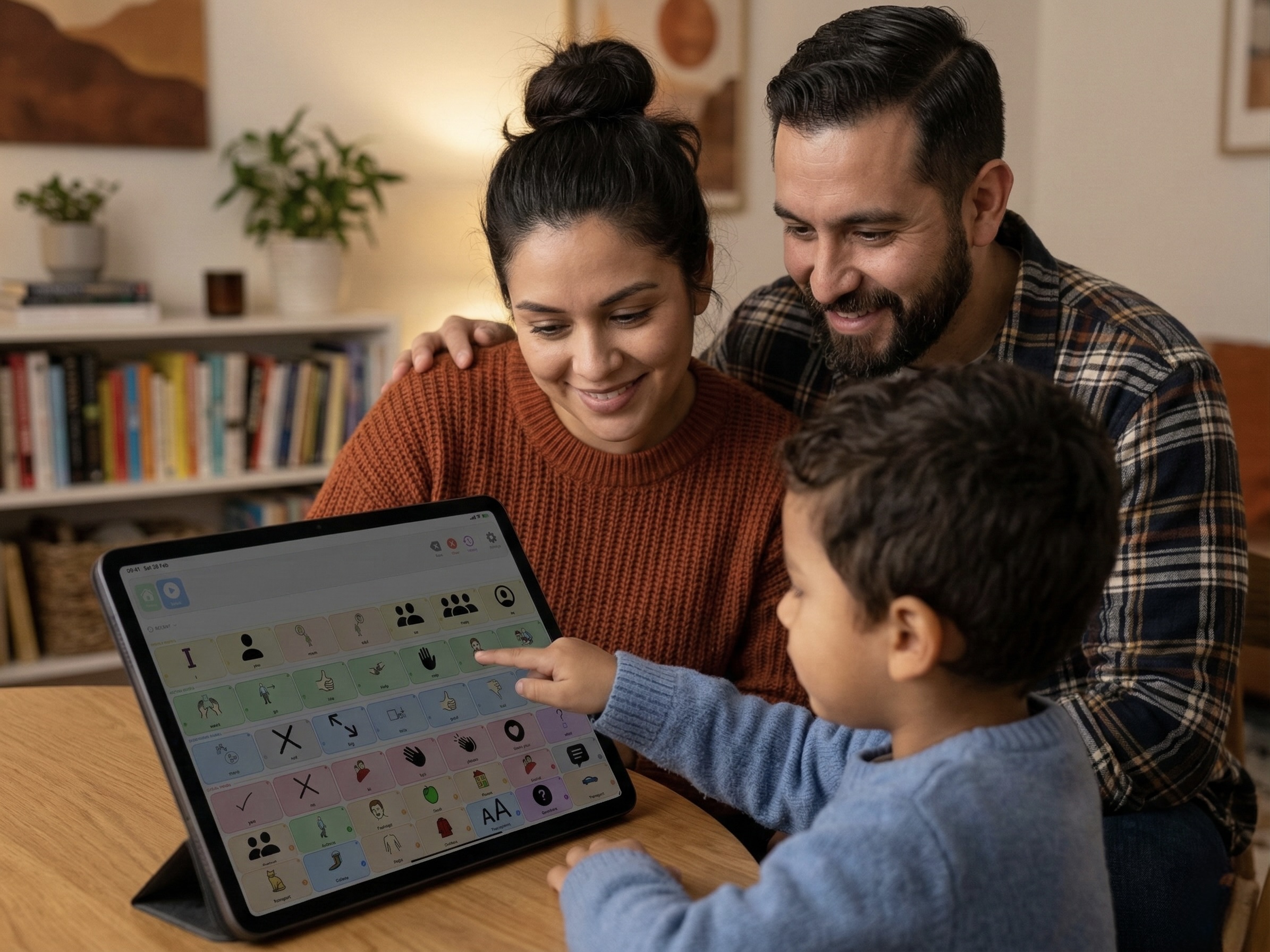
It is usually the first question parents ask a speech-language therapist, often before the assessment is even finished: if we give her buttons to press, will she stop trying to talk? The worry makes sense. Speech is hard work for your child, and a tap on a screen looks so much easier. It can feel like handing over a shortcut that lets the hard work stop.
So let us answer it properly. This article looks at what the research actually says about AAC (Augmentative and Alternative Communication) and speech, why the fear gets the story backwards, and a few other AAC myths that deserve to be retired with it.
Where the Fear Comes From
The worry rests on an idea that sounds reasonable: children learn to talk because they have to, so removing the struggle removes the motivation. But that is not how early language works. Children do not learn to talk through struggle; they learn through thousands of successful back-and-forth exchanges. Every time your child communicates something and the world responds, the brain's language system gets a rep in. When a child cannot make themselves understood, they do not get more motivated. They get fewer of those reps, and often they simply stop trying.
What the Research Says
This question has been studied for decades, across many children and many types of AAC. The findings are remarkably consistent: AAC does not slow down speech development, and for most children studied it goes hand in hand with speech gains. Reviews of the research repeatedly find increases in spoken language after AAC is introduced, and no study has shown that introducing AAC makes a child stop talking. Speech-language therapy bodies around the world now recommend starting AAC early rather than waiting to see if speech comes first.
No study has found that AAC stops children from talking. The consistent finding is the opposite: communication builds communication, and speech tends to grow alongside AAC, not instead of it.
Why AAC Often Helps Speech
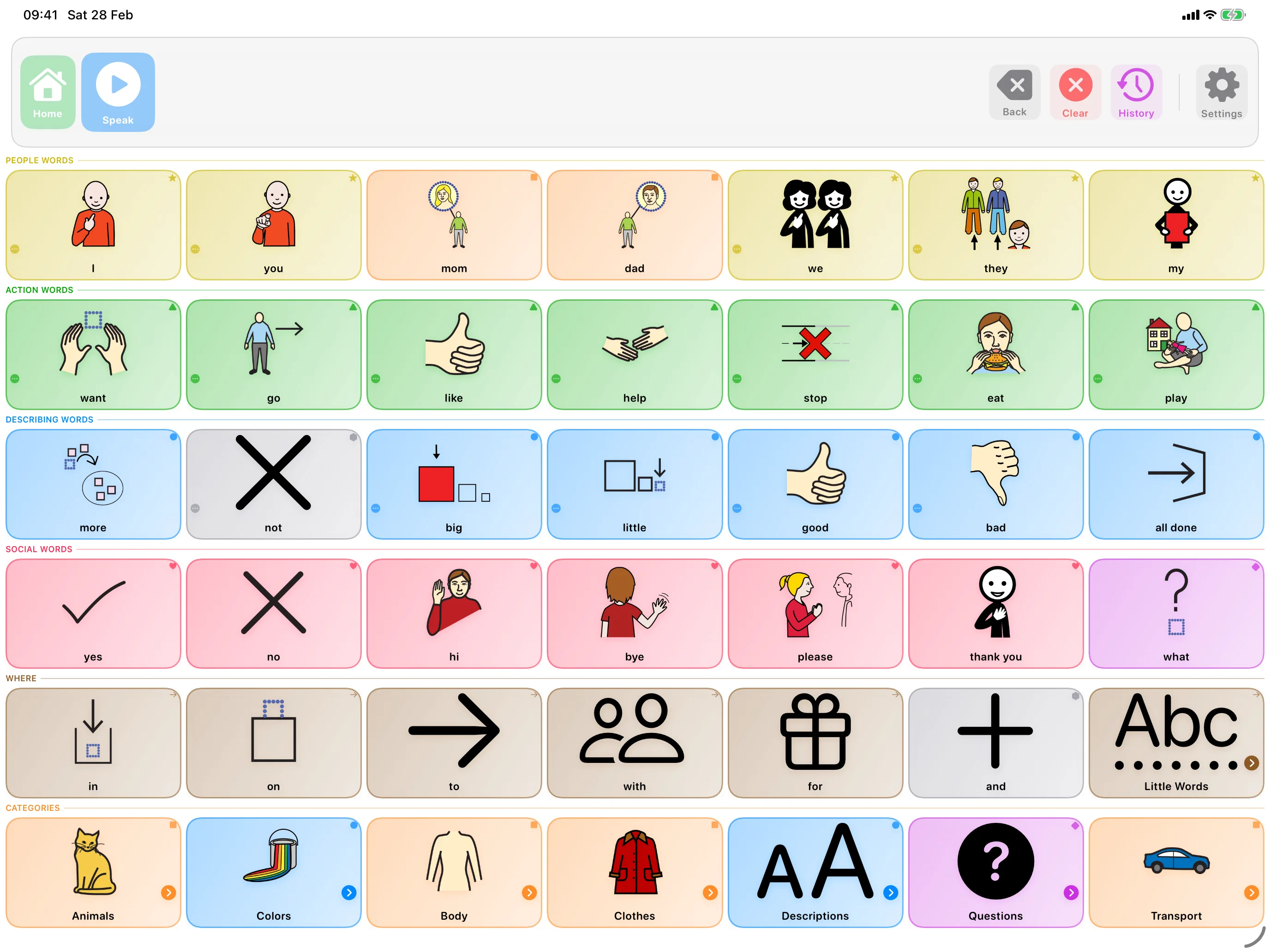
- Every tap is a spoken model. The app says the word aloud clearly and identically every time, which is exactly the kind of repetition speech learning is built on.
- It takes the pressure off. When a child has a reliable way to be understood, interactions stop being tests. Relaxed children communicate more, and more communication means more practice.
- It builds the language underneath. Vocabulary, sentence structure, and turn-taking all develop through AAC use, and they are the same foundations spoken language sits on.
- It keeps development moving. While you wait for speech, the window for learning language is open. AAC makes sure it does not close empty.
Other Myths Worth Letting Go
- "She is too young for AAC." There is no minimum age and there are no prerequisites. Children learn symbols the way they learn words: by seeing them used. Toddlers can start.
- "AAC is a last resort." Waiting until every other option has failed just means years of frustration first. AAC works best when it starts early, alongside speech therapy rather than after it.
- "He will get lazy and rely on it." Children use the fastest reliable way to communicate. When speech becomes easier than tapping, they speak. Until then, the app is what keeps communication growing.
- "AAC is only for children who will never speak." Most AAC users also use speech, sounds, and gestures. AAC fills the gaps, whether that is for a season or for life.
- "She must master symbols before getting more words." Children need access to rich vocabulary before they can use it, the same way speaking children hear thousands of words they cannot yet say.
What Actually Helps Speech Develop
Whatever combination of speech, signs, and AAC your child uses, the same things move language forward: respond to every attempt to communicate as if it counts, because it does. Model language constantly, on the app and out loud, without demanding anything back. And work with a speech-language therapist so AAC and speech goals pull in the same direction rather than competing for time.
Getting Started Without the Worry
If the fear of harming speech has been holding you back, you can set it down. The evidence says the bigger risk is waiting. SpeakPad is a free AAC app for iPhone and iPad, built so you can start today: every tap speaks a clear word aloud, buttons never move so your child can build muscle memory, and it grows from first words to full sentences. You can try it alongside speech therapy and see how your child responds.
Related reading
- AAC for Children With Cerebral Palsy
- AAC for Children With Down Syndrome
- AAC for Gestalt Language Processors
- Moving From PECS to an AAC App
- Apps for Late Talkers: What Helps and What to Skip
- How to Lock an iPad to One App with Guided Access
- What Are Core Words? A Simple Guide to AAC Core Vocabulary
- AAC for Childhood Apraxia of Speech (CAS): A Parent's Guide
- Best Free AAC Apps for iPad in 2026
- How to Import AAC Boards from Other Apps (OBF & OBZ Explained)
- Best AAC Apps for Autism on iPad (Parent Guide)
- The Best AAC Apps for Toddlers with Speech Delays
- How to Introduce an AAC Device to a Non-Verbal Child
More Communication, Not Less
Private, offline AAC for iPhone and iPad. Speaking is always free, with optional SpeakPad Pro tools for caregivers.
Learn More About SpeakPad