A snack and a favorite game offer plenty to talk about: something tastes good, a lid is stuck, a tower falls, or someone has had enough. You can show how AAC fits these moments without asking a child to repeat a word or earn their turn.
The examples below are starting points, not a lesson script. Follow the child's interests and keep their usual ways of communicating available.
Have the words within reach
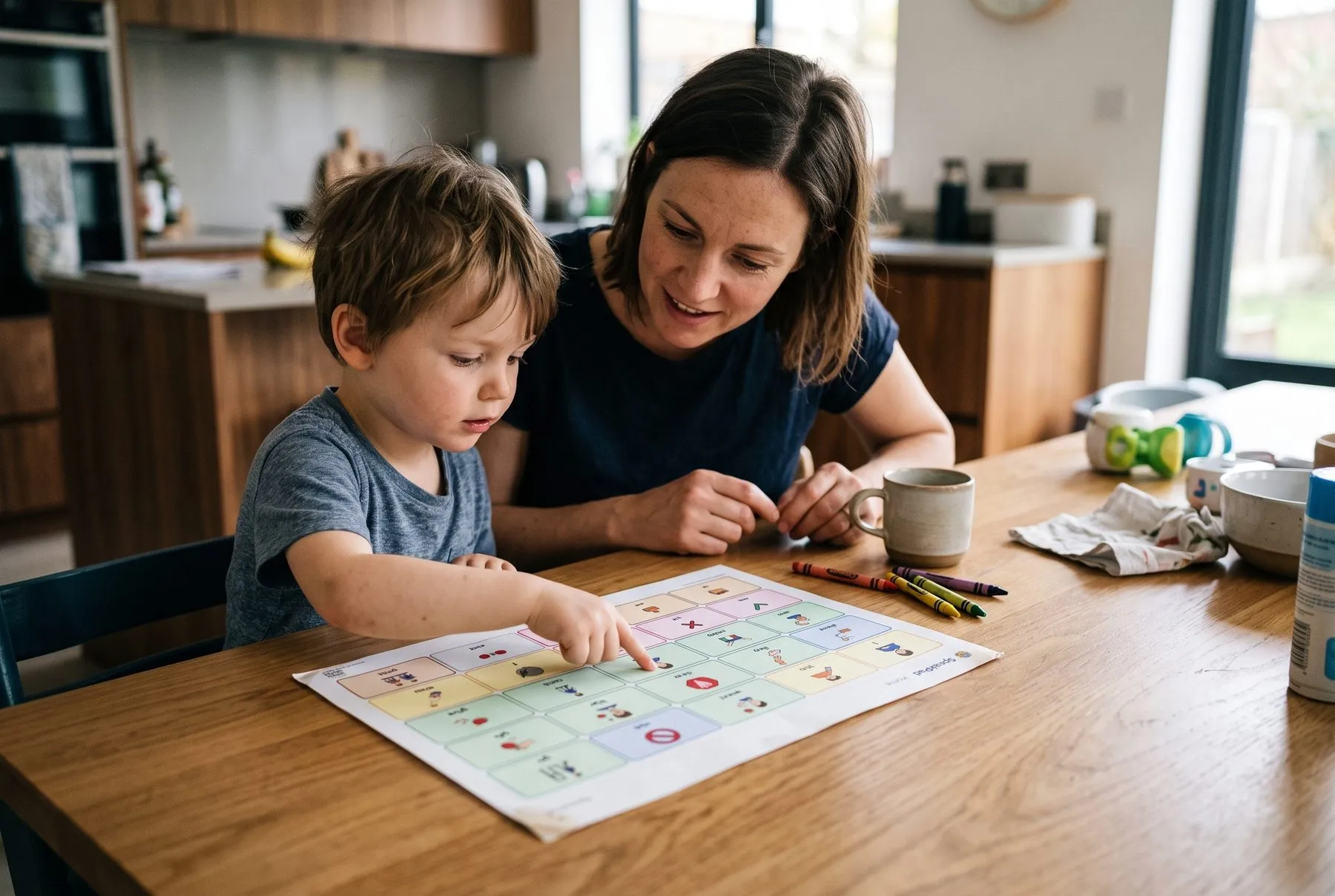
Keep the child's communication system nearby, charged and accessible. In SpeakPad, start with their familiar board and add the Mealtime or Play topic when useful. Keep broad words such as more, stop, like, help and different available alongside food and toy names. Check the exact labels on your own board before beginning.
A small printed board can sit beside a plate or on the floor. Use the linked printable boards as an extra option, while keeping access to the child's broader vocabulary. Personal photos can help name a favorite cup, pet or toy.
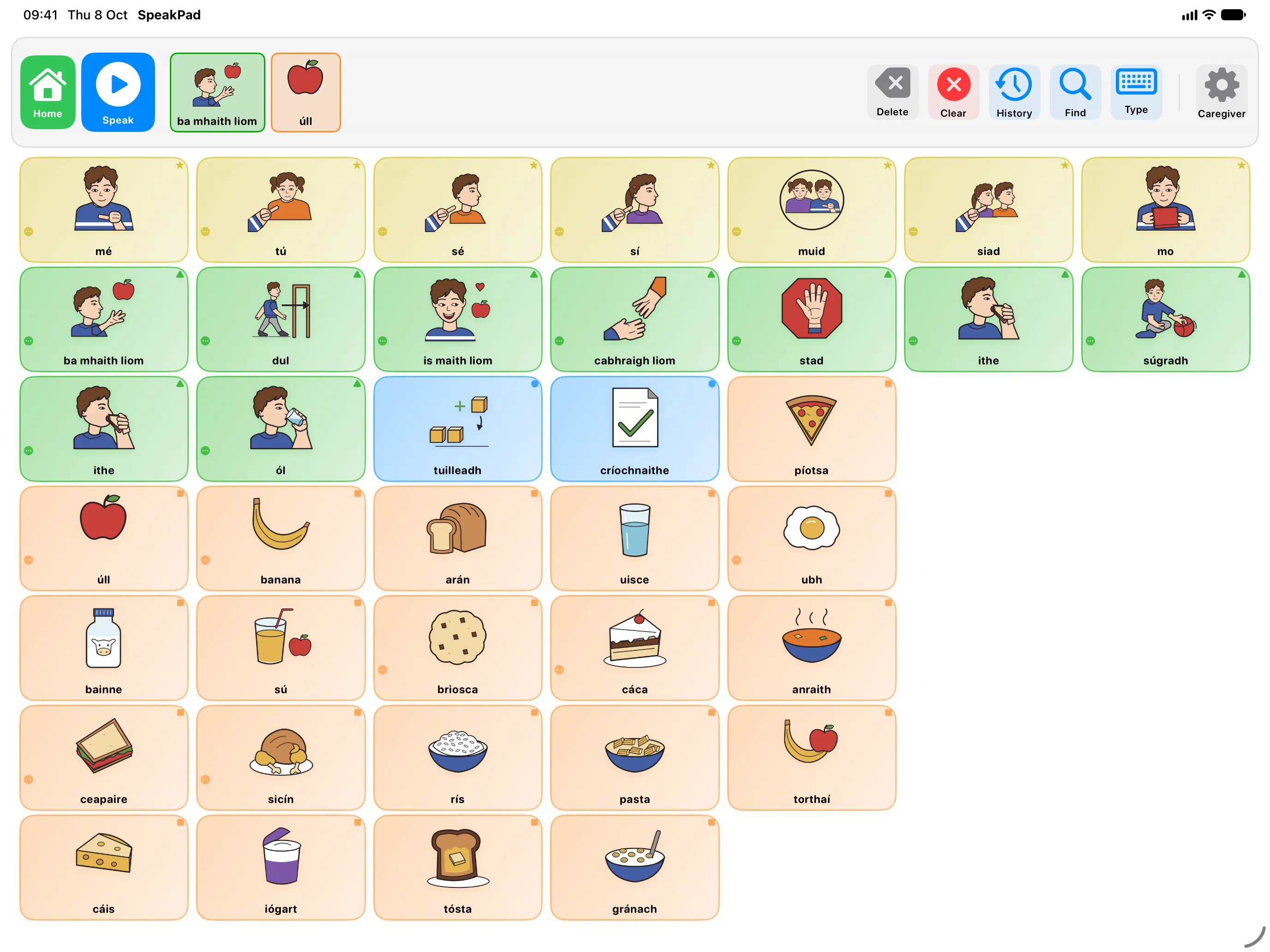
Model your message, then leave space
Modeling means using the board yourself while talking. If a bubble floats past, say 'That is big' and point to or tap big. You do not need to select every spoken word. Begin with one or two useful words that fit what is happening.
Pause naturally, without a countdown or expectant demand. The child may answer with a look, movement, sound, speech or AAC, or may continue playing. Notice and respond to the meaning. Keep your modeling brief enough that the activity remains theirs.
Snack: more than asking for food
- Request: when you want another piece yourself, model more. Offer the child food normally; a button press is not a condition for receiving it.
- Comment: taste something and model like or good. Your child might prefer different, not, or a face that says the same thing.
- Help: if a container happens to be difficult to open, model help as you assist.
- Refuse: respond when the child pushes the plate away. You can model stop or all done and acknowledge their choice.
Keep drinks, food and assistance available whether or not the child uses the board.
Play: follow the interesting part
With bubbles, model go when you blow, big when a large bubble appears, and again when you want another round. With blocks, try up and more as the tower grows, and all done when it falls. With a toy animal, you might model sleep, eat or where.
If the child takes the game in another direction, follow that topic. A model of different can accompany choosing another toy. A model of help can accompany fixing a wheel. These are examples of real messages, not a sequence the child must complete.
Make room for no, mistakes and surprises
Useful communication includes disagreeing, changing a plan and saying you misunderstood. Keep no, stop and help easy to find. If you guess incorrectly, acknowledge it: 'I thought you meant bubbles. Something different?' Offer time and available ways to clarify, rather than repeatedly asking the same question.
The Communication Bill of Rights includes refusing and expressing preferences. In practice, that means an adult's response matters as much as access to a button. Do not guide the child's hand to produce an answer.
Choose one routine to try again
Afterwards, note one practical detail: which words you could find, which message was missing, or whether the board was comfortably positioned. Add a needed word without rearranging familiar words. A lack of taps does not tell you what the child understood or whether the shared time was worthwhile.
Repeat a routine you both enjoy, with different messages as they arise. For setup, see your first week with SpeakPad; for adding photos and words, see editing boards. A speech and language therapist can help adapt access and vocabulary to the individual.
Want a board that speaks?
Private, offline AAC for iPhone and iPad. Speaking is always free, with optional SpeakPad Pro tools for caregivers.
Download on the App Store