If you have started comparing your toddler's words to the milestone charts, you are probably somewhere between "every child is different" and quiet 2am googling. Both instincts are right: many late talkers do catch up on their own, and acting early is still the best move for the ones who will not.
This article covers what "late talker" actually means, the signs that deserve a professional opinion rather than watchful waiting, and, because you are likely wondering, what an app can and cannot do to help.
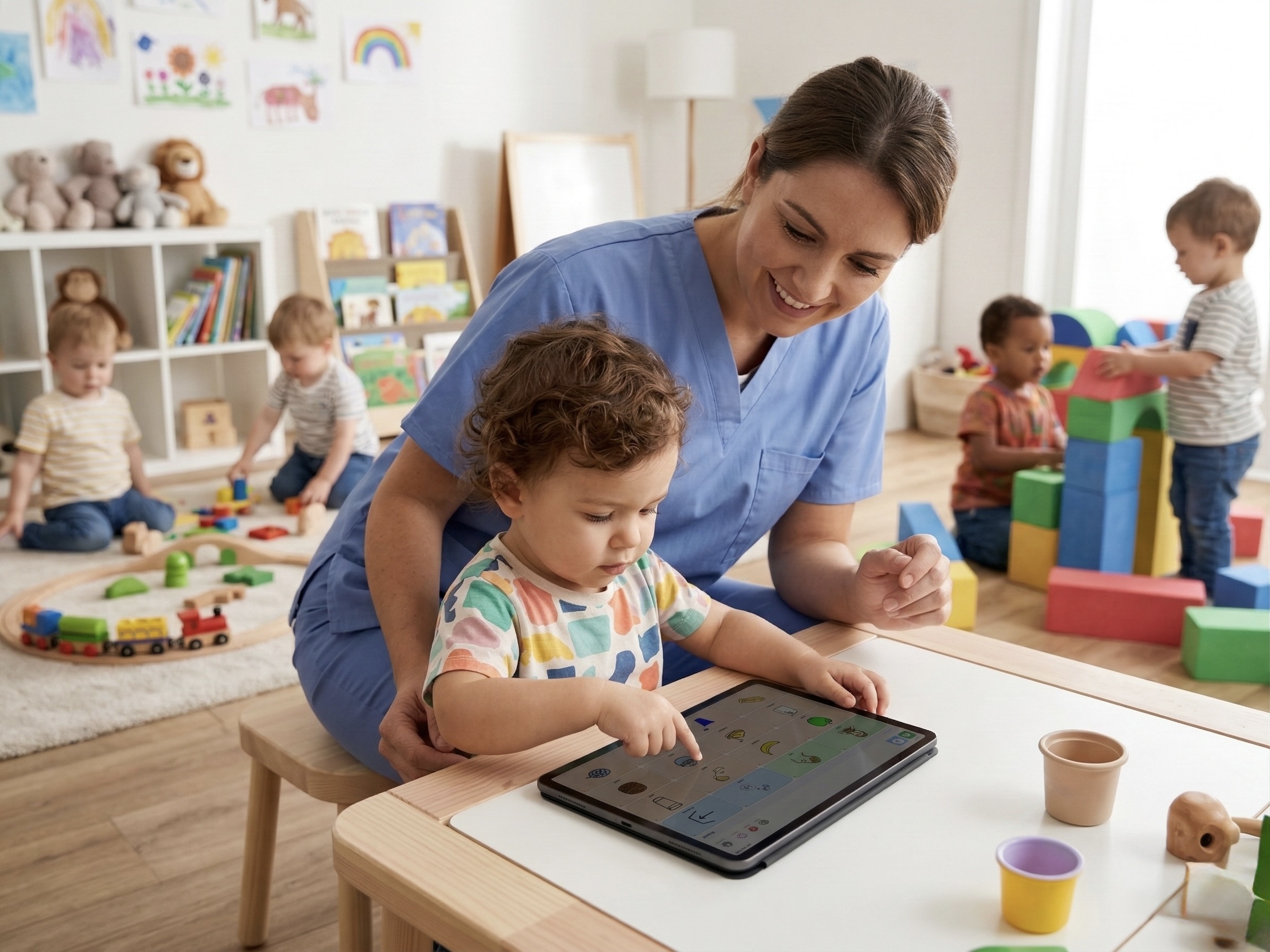
What Is a Late Talker?
A late talker is usually a child between about 18 months and 3 years who understands well and is developing typically in other areas, but has few spoken words for their age. As a rough guide, professionals start paying attention when a child has fewer than 50 words or no two-word combinations by age two. Understanding the difference matters: a child who follows instructions and points and plays but says little has a different picture from a child who also seems not to understand.
When to Seek Help
You do not need to wait for a diagnosis, a certain age, or a health visitor to bring it up first. Speak to a speech-language therapist or your doctor if any of these sound familiar:
- No babbling, pointing, or gestures by 12 months
- No first words by 16 to 18 months
- Fewer than 50 words or no two-word phrases by age 2 to 2.5
- Your child loses words or skills they used to have
- They rarely respond to their name or seem not to understand simple language
Ask for a hearing test as part of any assessment: glue ear and ear infections are a common, treatable reason for slow talking. The worst realistic outcome of asking early is being told everything is fine, and the toddler years are when language grows fastest.
Can an App Teach a Toddler to Talk?
Honestly: no app teaches a child to talk on its own, and any app promising that is selling something. Language grows through live back-and-forth interaction with people. Research on screen time consistently finds that passive video does little for early language, but that screens used together, with a caregiver talking about what is happening, can genuinely support it. The right question is not "which app will teach my child words?" but "which app gives us more to talk about together, and gives my child a way to join in?" For most late talkers, the first help a speech and language therapist offers is coaching for parents: ways to talk and play that give your child more chances to communicate.
The findings of this meta-analysis support pediatric recommendations to limit children's duration of screen exposure, to select high-quality programming, and to co-view when possible.
What Makes an App Worth Having
- It speaks real words. Tapping a picture should say the word aloud, clearly and the same way every time. That is a model your child can copy.
- It starts with useful words. More, go, help, no, want get a toddler further than a screen full of zoo animals.
- No ads, rewards, or noise. Confetti and jingles teach children to chase the reward, not the word.
- Your child drives it. Apps where the child chooses what to say beat apps that quiz them.
- It is built to be used together. The app should fit into play and daily routines, not replace them.
There is no evidence that it does. In research with young children who have language delays or disabilities, AAC has not reduced speech and often goes with gains. Most of that research is not about typical late talkers, so treat an app as a way to talk together, not as a treatment.
How SpeakPad Helps Late Talkers
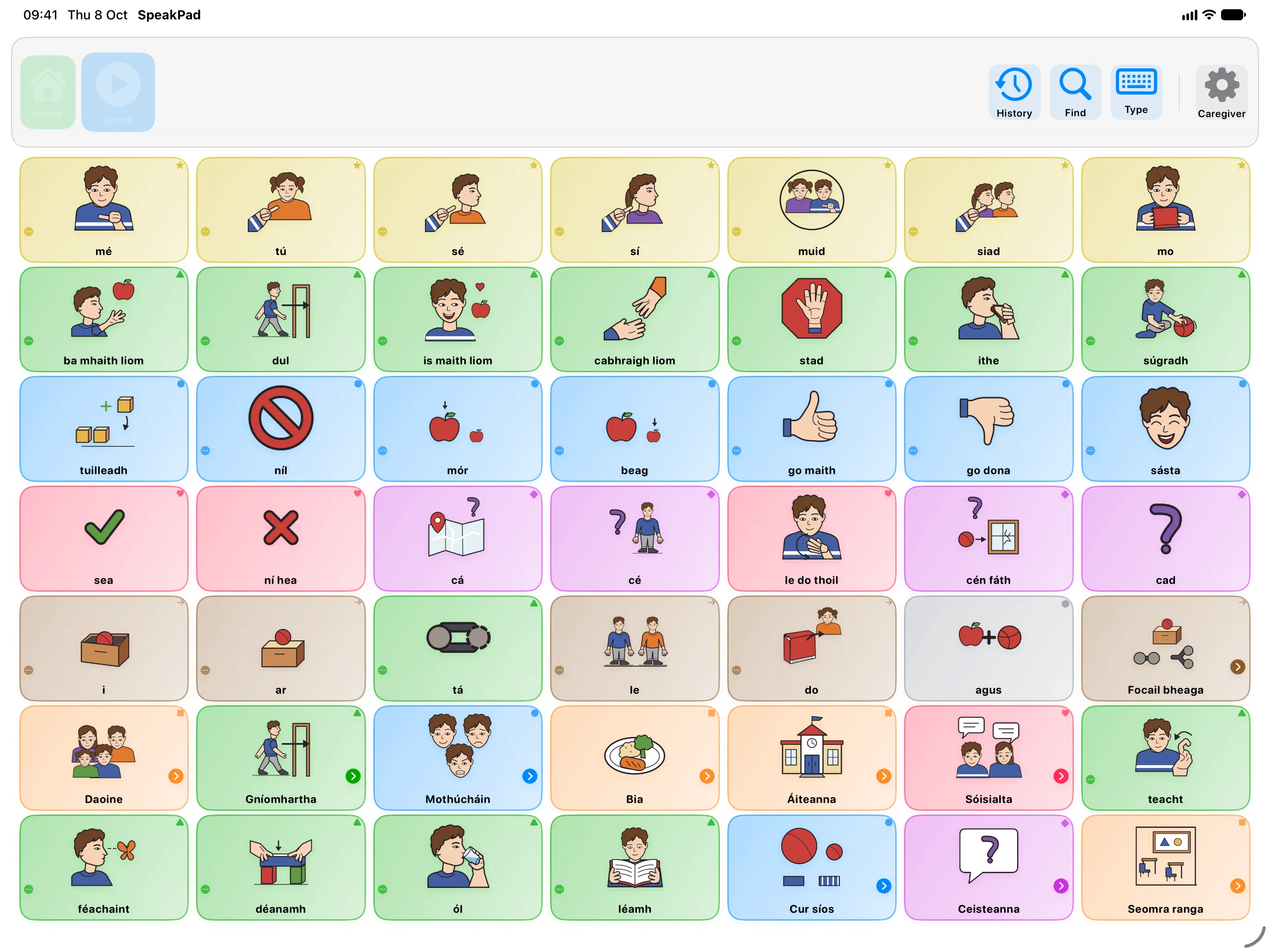
SpeakPad is an AAC app, which simply means every picture speaks. Your toddler taps milk and hears "milk", clearly and identically, hundreds of times across a week: exactly the repetition early speech is built on. The starter boards begin with first words rather than clutter, you can add photos of the real people and things in your child's life, and words never move position, so little hands learn where more lives. It is free to download, so you can see whether it clicks for your toddler.
Using It Day to Day
- Model, do not quiz. Tap words yourself as you talk: "more? MORE bubbles!" Your child learns by watching you use it.
- Follow their interests. Two minutes of engaged play beats twenty minutes of drills.
- Keep it in the routines. Snack time, bath time, and the buggy are where words happen.
- Count every kind of communication. A point, a tap, a sound, a word: respond to all of it like it counts, because it does.
Give the Words a Head Start
Private, offline AAC for iPhone and iPad. Speaking is always free, with optional SpeakPad Pro tools for caregivers.
Download on the App Store Learn More About SpeakPadSources
- American Speech-Language-Hearing Association (n.d.). Late Language Emergence. ASHA Practice Portal.
- Madigan, S., McArthur, B. A., Anhorn, C., Eirich, R., & Christakis, D. A. (2020). Associations between screen use and child language skills: a systematic review and meta-analysis. JAMA Pediatrics, 174(7), 665-675.
- Romski, M., Sevcik, R. A., Adamson, L. B., Cheslock, M., Smith, A., Barker, R. M., & Bakeman, R. (2010). Randomized comparison of augmented and nonaugmented language interventions for toddlers with developmental delays and their parents. Journal of Speech, Language, and Hearing Research, 53(2), 350-364.