If your child's talking is built from borrowed lines, a film quote for excitement, "are you okay?" whenever anyone is sad, whole songs at bedtime, you may be raising a gestalt language processor. For a long time this kind of echoed speech was dismissed as meaningless. It is not. For these children, it is language, and it is the start of the same journey every child makes toward original sentences.
Gestalt language processors (GLPs) learn language in whole chunks first, phrases and scripts tied to moments and feelings, and only later break them into single words they can recombine. That has real implications for how you set up an AAC app, because most AAC advice quietly assumes the opposite style of learner. Here is what to do differently.
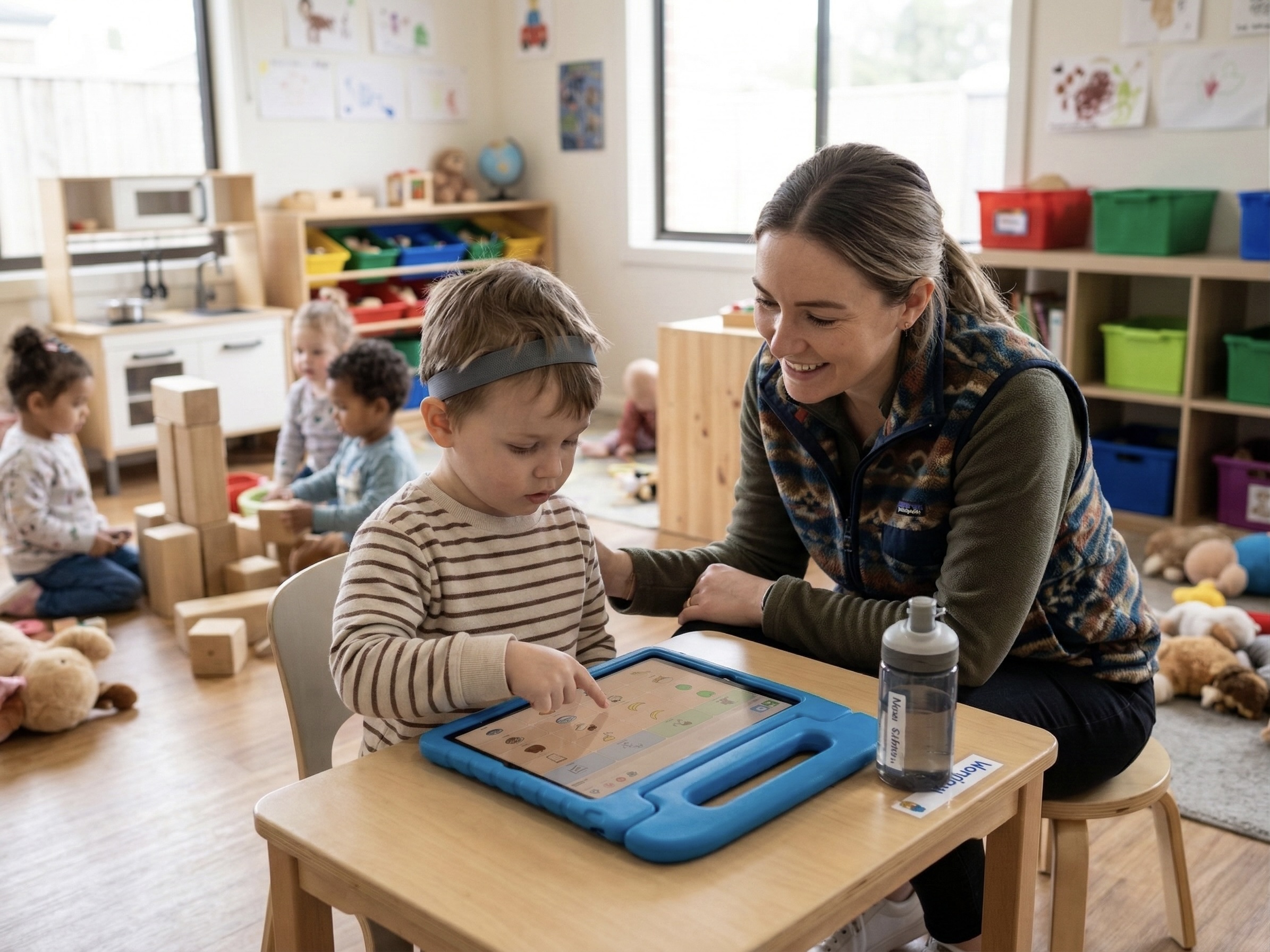
What Is Gestalt Language Processing?
Most language advice assumes children learn word by word: first milk, then more milk, then I want more milk. Gestalt processors go the other way. They pick up whole strings, "let's get out of here!", tied to the feeling of the moment they heard them, and use the string to mean the feeling. Over time, with support, those chunks loosen: "let's get" recombines with new endings, and eventually single words emerge as flexible building blocks. Both routes end in original, flexible language. They just travel in opposite directions. Researchers still debate how well this framework describes what is happening under the surface, but the part that matters day to day is not in doubt: these children's scripts carry meaning, and the advice below holds either way.
Echolalia Is Communication
The scripts are not noise to be extinguished. A child who says "to infinity and beyond!" while flapping with joy is not stuck on Toy Story; they are telling you they are delighted, with the best tool they have. When you treat scripts as meaningful, you respond to what the child meant, and responding to meaning is how all language grows. The practical shift for AAC is simple but big: their phrases deserve buttons.
Why Word-by-Word AAC Can Frustrate a GLP
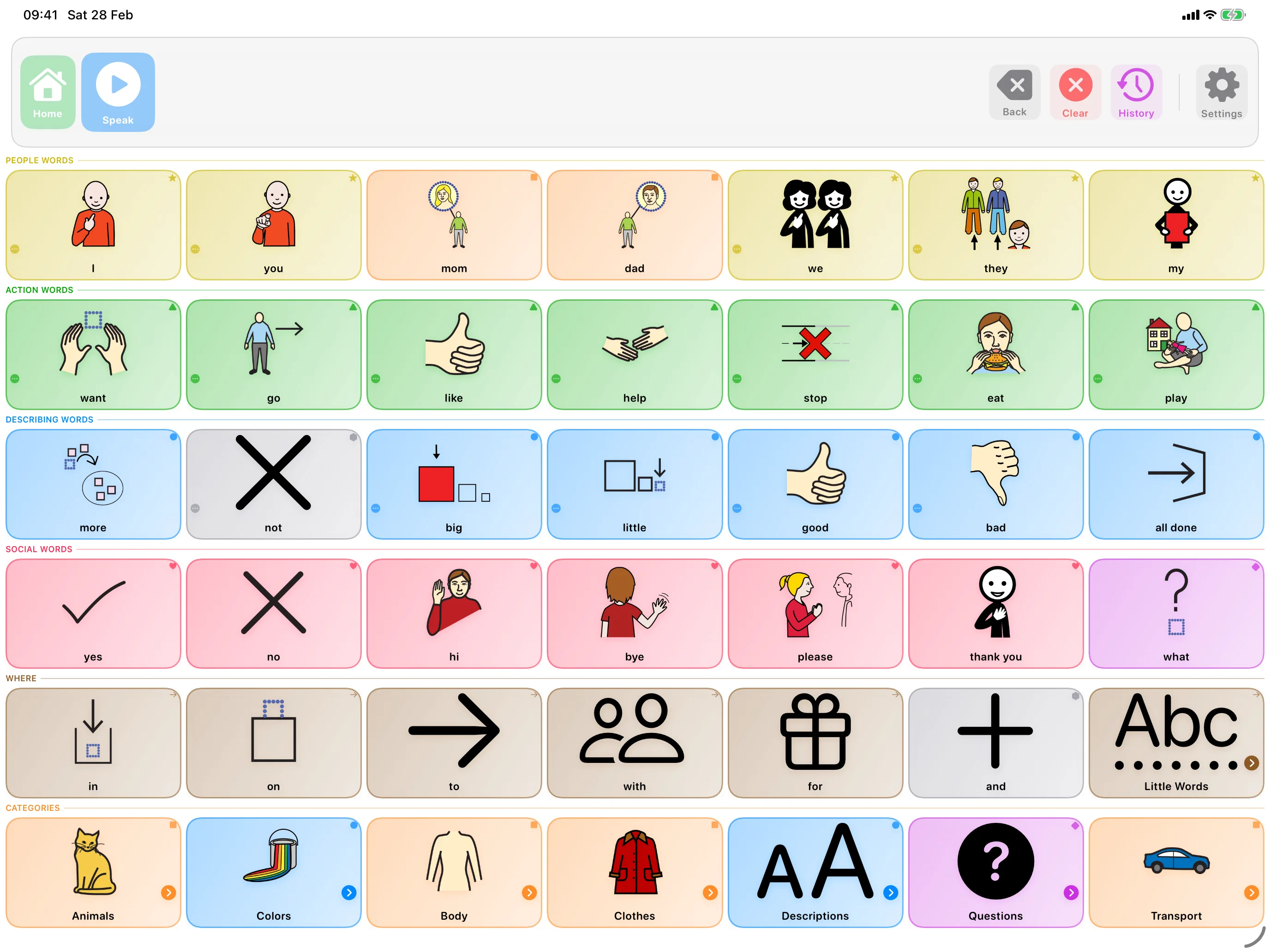
A classic core-word board offers single words like go, more, want, which suits analytic learners perfectly. But a gestalt processor's units of meaning are bigger than that. If the phrase in their head is "wanna watch something?" and the board only offers want, the board does not speak their language yet. Some children go quiet on AAC not because AAC is wrong for them, but because the board was set up for a different kind of learner.
Setting Up the Board for a Gestalt Processor
- Put their actual scripts on buttons. The real phrases, word for word, as they say them. "Let's get out of here" is a legitimate vocabulary item.
- Add phrases for feelings and needs in natural, sayable language: "something's wrong", "come with me", "I need a break", "that was awesome".
- Keep single words on the board too. As your child starts mixing and matching chunks, the single words are there waiting. You are building for the next stage, not just this one.
- Keep everything where it was. Stable button positions matter for every AAC user, and scripts especially become automatic through repetition.
- Use images that match the moment. A photo from the actual event or film scene often anchors a script better than a generic symbol.
A whole phrase on one button sometimes worries caregivers who have been told to build word by word. For a gestalt processor, the phrase is the word. Honoring that is what eventually gets you to flexible, self-generated sentences.
Modeling for a Gestalt Processor
Model the way they learn: whole, natural phrases in real moments, spoken and tapped together. "Time to go!" as you head for the door beats "go" in isolation. Later, model small variations on their own scripts ("let's get out of the rain!") to show how chunks can bend. And keep intonation natural; melody is often what GLPs latch onto first.
How SpeakPad Helps
SpeakPad does not decide what counts as a word, so a button can hold anything: a single word, a five-word script, or a song line. The label and the spoken text can differ, letting a button read "outta here!" while speaking the full phrase exactly the way your child says it. Sentence history keeps the phrases they use most within easy reach, you can use photos from your own camera roll to anchor scripts to real moments, and buttons stay where you put them. It is free to download, so you can build a script-first board this afternoon and see how it lands.
Related reading
- AAC for Children With Cerebral Palsy
- AAC for Children With Down Syndrome
- Moving From PECS to an AAC App
- Apps for Late Talkers: What Helps and What to Skip
- How to Lock an iPad to One App with Guided Access
- Will AAC Stop My Child From Talking?
- What Are Core Words? A Simple Guide to AAC Core Vocabulary
- AAC for Childhood Apraxia of Speech (CAS): A Parent's Guide
- Best Free AAC Apps for iPad in 2026
- How to Import AAC Boards from Other Apps (OBF & OBZ Explained)
- Best AAC Apps for Autism on iPad (Parent Guide)
- The Best AAC Apps for Toddlers with Speech Delays
- How to Introduce an AAC Device to a Non-Verbal Child
A Board That Speaks Their Language
Private, offline AAC for iPhone and iPad. Speaking is always free, with optional SpeakPad Pro tools for caregivers.
Learn More About SpeakPad