SpeakPad 里的每个词都有一个固定的位置,而且一直在那里。孩子会记住一个词在哪里,很快就能不用找就点到它,就像你在家里不用看也能摸到电灯开关。
词汇增加,位置不变
不必一开始就用完整的沟通板。选择一个词汇阶段,SpeakPad 会隐藏孩子暂时用不到的词,留下空位。提升阶段后,空位就会填上词语,其他按钮都不会移动。
在 SpeakPad 入门中,三个阶段分别包含:
- 最初词汇:约 125 个词语和短语
- 成长中:约 750 个
- 全部:约 2500 个
校园词汇和社交词汇也以同样的方式扩展。
同类的词放在一起
主沟通板按词的种类分组,每一类都有自己的颜色。“我”“你”这样的词在最上面一行,动作词在下一行。底部的文件夹通往其他所有词语。
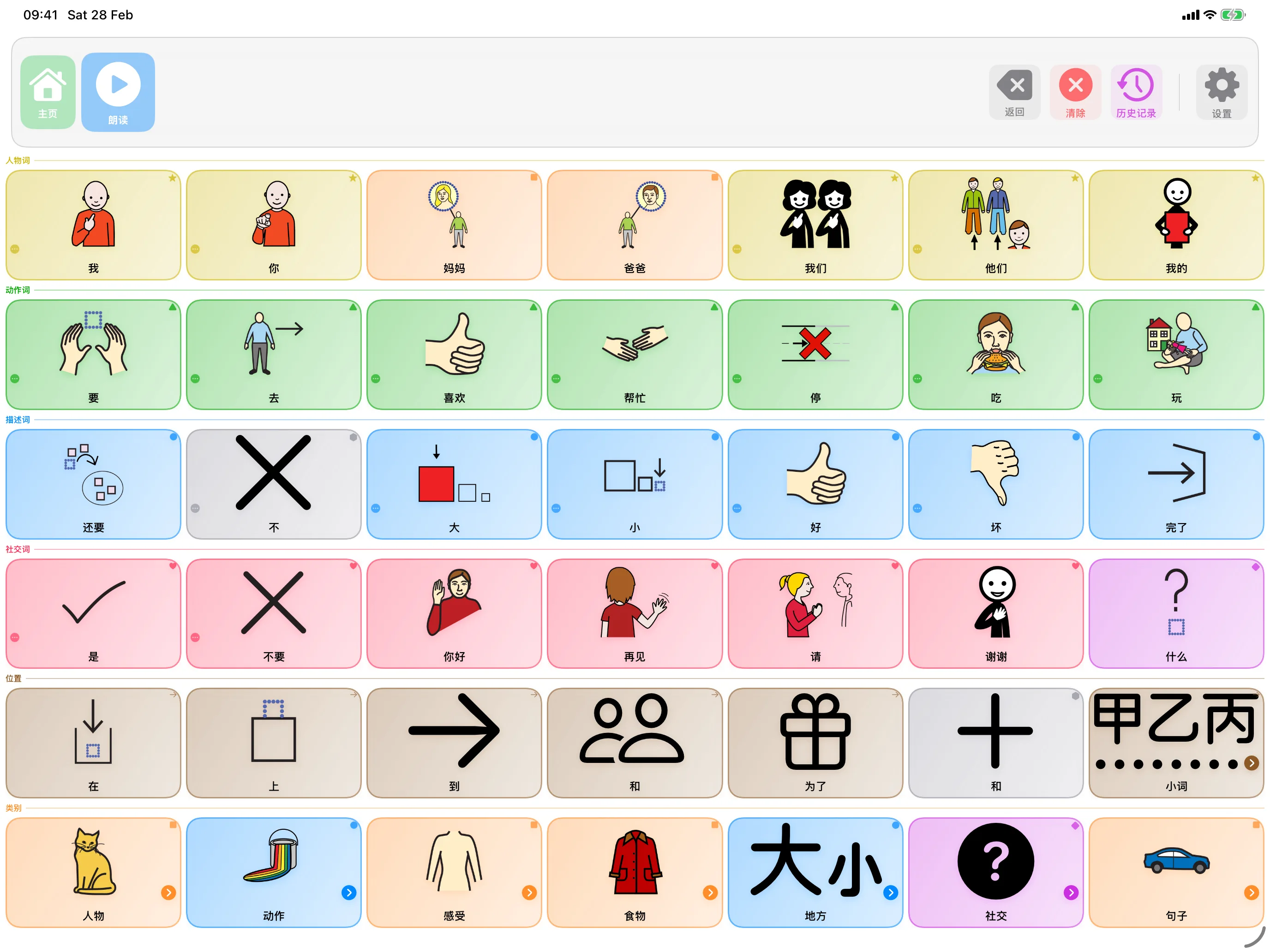
主沟通板上是幼儿最常用的词,依据已发表的研究挑选。默认情况下,它最上面的三行也会固定显示在其他每个沟通板的顶部,所以“要”“还要”“停”这样的词始终只需点一下。在文件夹里,越常用的词排得越靠前。
更换词汇组不用从头再来
SpeakPad 入门、校园词汇和社交词汇让核心词保持在相同位置,所以孩子换到另一个词汇组时,不用重新学习沟通板。校园词汇和社交词汇各自更换第一屏上的一个文件夹:前者打开“课堂上”,提供上课和上学日的词语,后者打开“我的生活”。大按钮是个例外:它的按钮更少、更大,适合还看不清或够不到完整沟通板的孩子,所以词语的位置不同。
背后的研究
在一项研究中,当图片一直留在相同位置时,幼儿到第五次练习时找图片的速度明显快于图片每次都换位置的情况(Thistle 等,2018)。在另一项研究中,图片按词的种类分组时,幼儿组合词语的速度更快(Thistle 和 Wilkinson,2017)。这两项研究的对象都是没有残障的儿童,所以它们只能作为参考,不能证明对每个孩子都适用。一篇关于 AAC 沟通板研究的综述也提出,孩子可以先从留有空位的布局开始,等熟悉之后再填满空位(Light 等,2019)。
参考资料
- Thistle, J. J., Holmes, S. A., Horn, M. M., & Reum, A. M. (2018). Consistent symbol location affects motor learning in preschoolers without disabilities: implications for designing augmentative and alternative communication displays. American Journal of Speech-Language Pathology, 27(3), 1010-1017.
- Thistle, J. J., & Wilkinson, K. M. (2017). Effects of background color and symbol arrangement cues on construction of multi-symbol messages by young children without disabilities: implications for aided AAC design. Augmentative and Alternative Communication, 33(3), 160-169.
- Light, J., Wilkinson, K. M., Thiessen, A., Beukelman, D. R., & Fager, S. K. (2019). Designing effective AAC displays for individuals with developmental or acquired disabilities: state of the science and future research directions. Augmentative and Alternative Communication, 35(1), 42-55.
- Banajee, M., Dicarlo, C., & Buras Stricklin, S. (2003). Core vocabulary determination for toddlers. Augmentative and Alternative Communication, 19(2), 67-73.
- Beukelman, D. R., Jones, R. S., & Rowan, M. (1989). Frequency of word usage by nondisabled peers in integrated preschool classrooms. Augmentative and Alternative Communication, 5(4), 243-248.